Wednesday, 12 June 2013

SECOND NATURE

I photograph pretty much everything, but I will be lying if I say I love all my photography subjects equally. Truth be told, I favor some subjects over others; nature for instance is one subject area that gets the least amount of love from my cameras. Come to think of it, this is the main reason why my “critique” <whose views I always appreciate> keeps telling me to stick to my forte and let nature be! In my defense I would say photographing subjects like nature, wildlife and landscape is not a walk in the park. Though not impossible, they require some special form of attention, and Lord know patience is not one of my virtues though slowly but surely am working on it, since it is a prerequisite for taking good pictures. I believe the main ingredients of nature photography apart from having patience, is one to have a lot of interest and dedication as well as seizing travel opportunities. With these, shooting exotic locations or indigenous flora and fauna becomes second nature.                                                                                                        

I was trying to photograph a rather uncooperative subject (a bird) who flew all over the place, finally leading me to this nest only to find there was nobody home..

  
 Camera - NIKON D3100
 Focal Length - 55mm
 Shutter Speed - 1/80 sec

 Aperture - f/5.0 
 ISO/Film - 280
 Category - Nature 
 Uploaded - June 12th 2013  
 Taken - June 3rd 2013
 Location - USIU Nairobi, Kenya
 Copyright - Stephen Mukhongi


Saturday, 8 June 2013

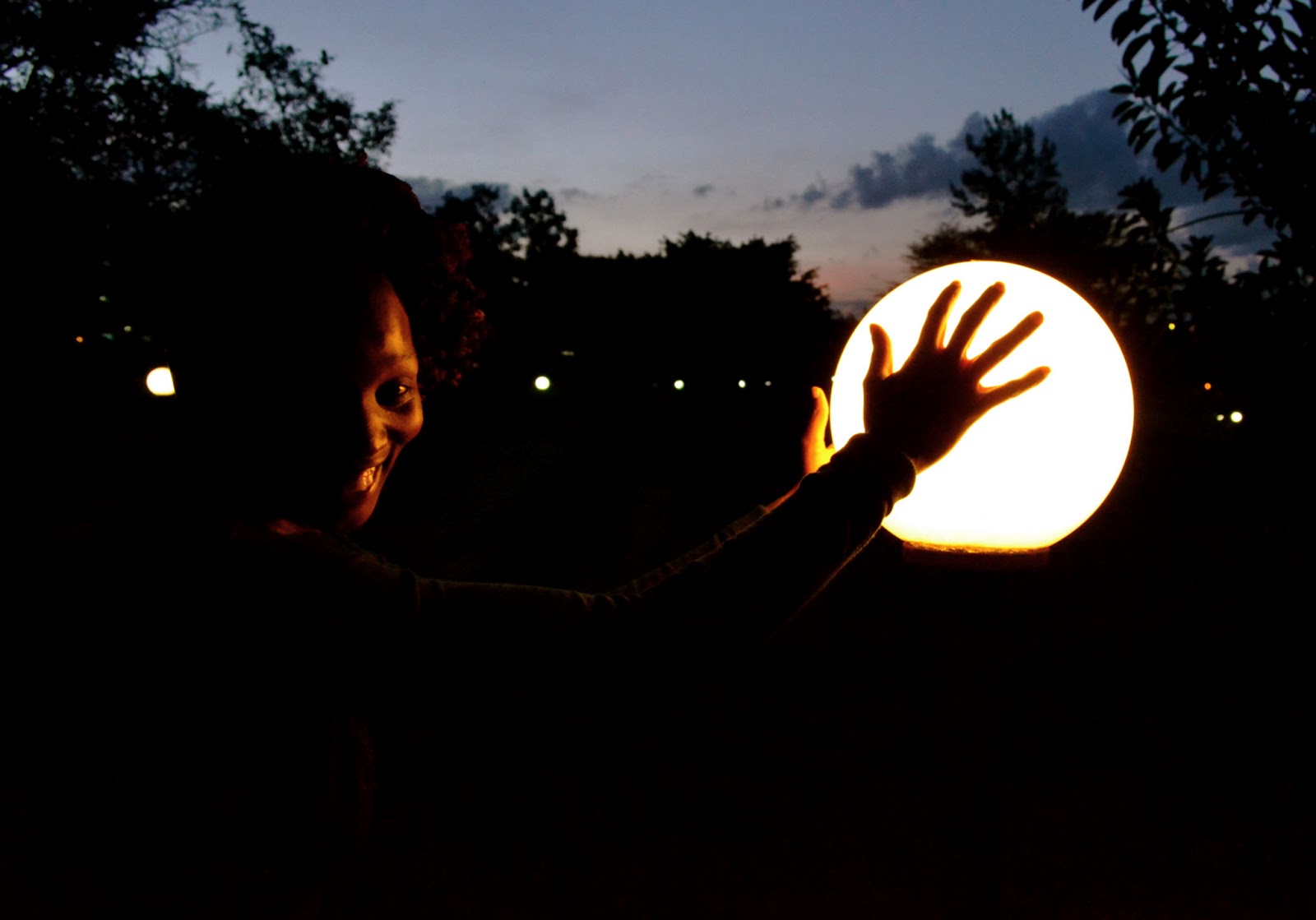
LET THERE BE LIGHT!

Light is the basic ingredient of photography; so I learn't in my fundamentals of photography class, and the term photography simply means writing or painting with light. It therefore goes without saying that in the absence of light, photography cannot exist. It is important for a photographer to understand and at times be able to manipulate the amount (quantity) and/or the type (quality) of light in order to capture great images. The size or type of camera gear in use does not matter; whether one decides to use film or go digital, light is key. Photographers work with mainly two light sources, natural and/or artificial. One may be favored over the other but at times the situation ordinarily will dictate the type of light source to be used. Example, nature photographers will have the sun and other natural sources as their only light sources, while for commercial photographers artificial lighting may well be preferred. Events photographers on the other hand, normally make due with whatever sources of light that is thrown their way, and more often than not it’s a cocktail of light sources.
Whatever the case, one needs to master the basics of lighting in order to capture it creatively. Direction of light is one of the basics that guide me to know from which direction to shoot my subject(s), color temperature of light is another and it helps me with my composition plus it has to do with the time of day. Am certain we’ve all experimented or at least are familiar with the dawn and dusk advice; that those two times provide the best light for photography and that we should avoid shooting at noon due to harsh and hard light emanating from direct sunlight. A photographer also needs to know the degree of diffusion of light where indirect (diffused) light is favored over direct light hence the common use of reflectors, umbrellas, soft boxes and the fascination of shooting under sheds or cloudy conditions. Learning these, plus other light factors will not only improve your photography skills but it will also allow you room to think through your images creatively resulting to even greater images. 

Corazon's half-lit face and her "crystal ball"


          Camera - NIKON D3100
          Focal Length - 18mm
          Shutter Speed - 1/30 sec
          Aperture - f/5.6 
          ISO/Film - 3200
          Category - Abstract 
          Uploaded - June 8th 2013  
          Taken - May 22nd 2013
          Location - USIU Nairobi, Kenya
          Copyright - Stephen Mukhongi

Tuesday, 4 June 2013

PROFILE-PICK

If a simple picture speaks a thousand words, then a profile picture speaks a lot more and other than just identifying the owner; such a photo can communicate different messages whether intended or otherwise. Example, a profile photo can communicate success, professionalism or even desperation. We all want to create an impression on our online friends and more so on strangers (our target audience) and therefore a lot of consideration should be placed when deciding on the type of profile picture to use. This photo should at all times communicate who you are, also remember the moment you put out content on the world wide web, it gets a life of its own; you no longer own that photo or its subsequent effects the instant you press the upload button. A profile photo should be a recent photo of you and not that of your ‘adorable’ baby or your ‘cute’ puppy, those ones go to your cover photo which ideally depict your likes and interests. When taking the photo be aware of the lighting and you can use ‘bokeh’ to evade destructive backgrounds, also refrain from over-exposing or being overly ‘sexy’ as you never know who will be going through your photos… it might be your would-be boss! For the business oriented, use a profile picture as a personal brand and make sure your look is relevant for the field you work in since you want to maintain professionalism. For a decent profile photo have someone photograph you; the photos come out much better.         
       

Idris looking sharp in one of the photos he selected to use as his profile pic


       Camera - NIKON D3100
       Focal Length - 32mm
       Shutter Speed - 1/40 sec
       Aperture - f/5.6 
       ISO/Film - 1600
       Category - Fashion
       Uploaded - June 4th 2013  
       Taken - April 18th 2013
       Location - USIU Nairobi, Kenya
       Copyright - Stephen Mukhongi

Tuesday, 21 May 2013

ANTICIPATION

Throughout the period I have done photography, my work has been guided by three main pillars; preparation, anticipation and teamwork. According to my dictionary, to anticipate among other meanings is to see what is going to happen or what needs to be done and act accordingly. As a photographer it is important to always be a step ahead of each and every situation that one may find themselves in.This is the main reason why event rehearsals are a must attend especially for the official photographers. Most often than not, a run-through of the event beforehand, makes the difference between capturing the moments and totally missing out. In order to capture moving subjects or action photos there is no two ways about it; anticipation is key. One has to know exactly what moment to release the shutter before the right or natural time of the action.
  
Newly elected officials of SPAC club let fly during a group photo session 


       Camera - NIKON D3100
       Focal Length - 20mm
       Shutter Speed - 1/20 sec
       Aperture - f/3.8 
       ISO/Film - 100
       Category - Group 
       Uploaded - May 21st 2013  
       Taken - April 18th 2013
       Location - USIU Nairobi, Kenya
       Copyright - Stephen Mukhongi

Wednesday, 17 April 2013

STORYTELLER

Other than for identity, illustration, and advertising purposes, the other use of photographs is to tell a story (by depicting emotions). Storytelling through the use of pictures is usually employed in articles ordinarily found in lifestyle magazine section, in novels, adverts as well as in blogs; I must say this is one area I really enjoy shooting. The idea is to enact a scenario in order to capture the best images that can complement a particular article or story. However, shooting this kind of scenario is not a walk in the park. Just like filming a movie where it requires the whole crew, especially the D.O.P and the Director to think and act as one in order to bring the script to life, a photographer and the writer should work the same way, to capture the few photos and at times a single frame that will clearly depict the story. Such images will illustrate varied story types; from fashion stories, to stories on family matters, health, personal growth or even relationships like, love and surbsurvience; a stupid love story.

Juliet reacts to Betty and Ian's cosiness in an enacted scenario I shot for her story-blog


 Camera - SONY SLT-A57
 Focal Length - 18mm
 Shutter Speed - 1/60 sec
 Aperture - f/5.0 
 ISO/Film - 320
 Category - Editorial 
 Uploaded - April 17th 2013  
 Taken - March 26th 2013
 Location - USIU Nairobi, Kenya
 Copyright - Stephen Mukhongi

Tuesday, 16 April 2013

SHAPES & PATTERNS

Shapes and patterns are part of special and physical attributes that make good pictures. If we take a good look around us, we will notice that everything has a unique shape and is arranged in a distinct form. As a photographer, one just needs to be keen in their surroundings in order to point out these features. Example, buildings, roads and highways, artworks such as sculptors, home appliances, furniture, plants and animals and even human beings will from time to time form different shapes and patterns. People will either deliberately or at times unconsciously create such attractive outlines and designs from their actions; while standing like in a military parade, when sitting for instance in a church service or during their movements example, a group of athletes running a marathon. When any of these is captured in a unique way, it creates exciting images. For more dramatic effect, combine shapes and patterns with other special attributes like color and size.  

Students keenly following a presentation by Roland during a Journalism club event

             Camera - NIKON D3100
            Focal Length - 46mm
            Shutter Speed - 1/60 sec
            Aperture - f/5.3 
            ISO/Film - 3200
            Category - Event 
            Uploaded - April 16th 2013  
            Taken - February 15th 2013
            Location - USIU Nairobi, Kenya
            Copyright - Stephen Mukhongi

Friday, 12 April 2013

POINT OF VIEW

A picture just like a normal TV screen is usually perceived in two-dimension (2-D) by the viewer. This means that whatever a photographer decides to capture should fit into this reality. However, illustrating reality through 2D can be very boring to say the least; a description of such an illustration is the kind of one-sided drawings we used to do back in kindergarten. To make interesting images, it is important to avoid the usual and predictable point of view; subject facing camera type of shots. It is okay and advisable to be creative and think in three-dimensions (3D) as long as the final result will fit to our 2D perspective. At times I borrow ideas from videography, where using a still camera I would try out varied camera angles such as aerial or worm view, capture connecting shots like over the shoulder and occasionally I would even cross the dreaded line of axis commonly referred to as the 180 degree rule to capture my subject(s) from the reverse side. I can say most of the time I am impressed by the results. Just go on and give it a try!  

My friends Lucy (left) and Beatrice (right) strolling to a shoot location unawares of the happenings behind them
 
Camera - NIKON D3100
 Focal Length - 18mm
 Shutter Speed - 1/40 sec
 Aperture - f/3.5 
 ISO/Film - 800
 Category - Editorial 
 Uploaded - April 12th 2013  
 Taken - March 27th 2013
 Location - USIU Nairobi, Kenya
 Copyright - Stephen Mukhongi